When “Low” Finally Became “Depressed”
So I’m back with a book review. Or maybe three. But honestly, this feels more like a reflection than a review.
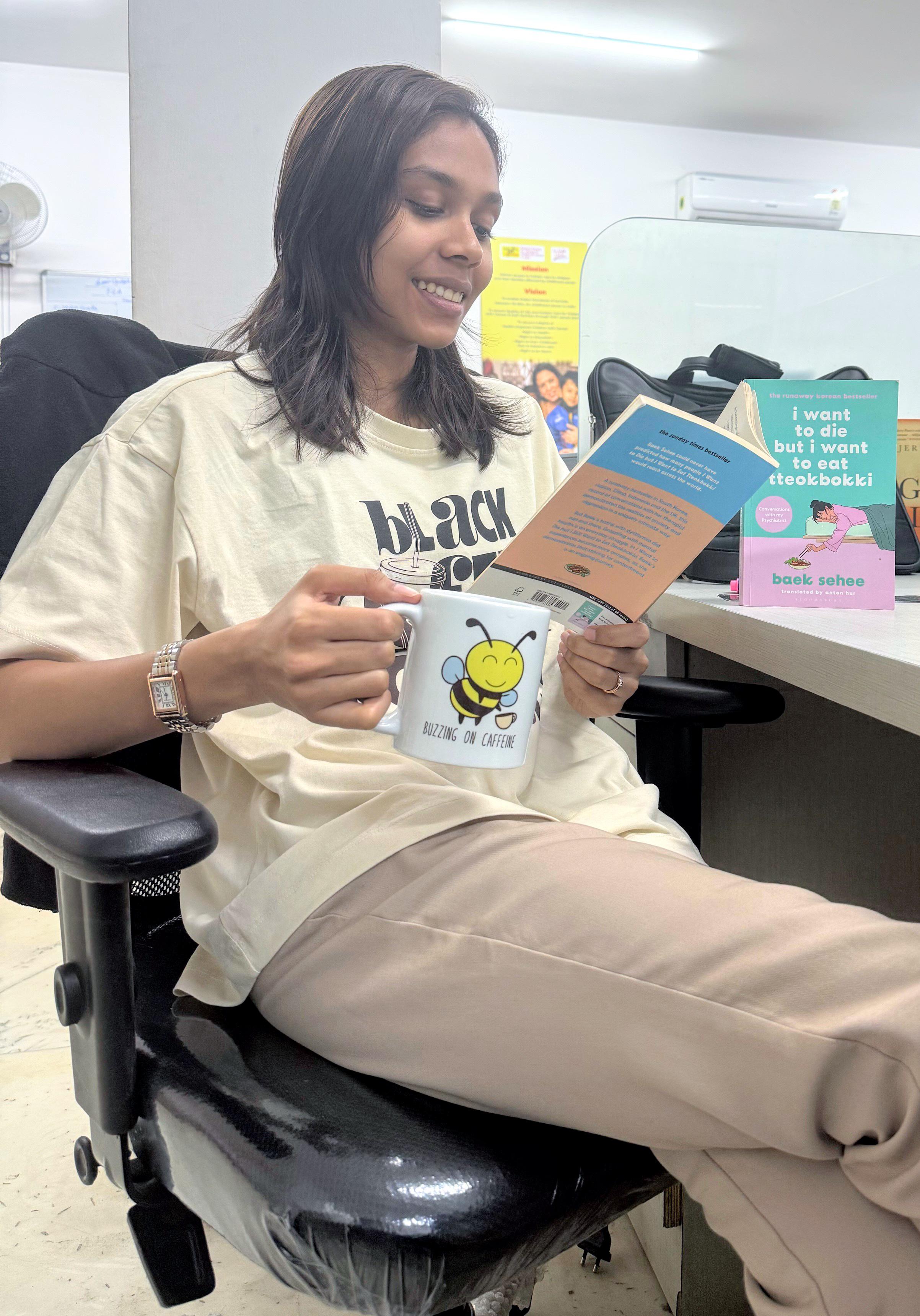
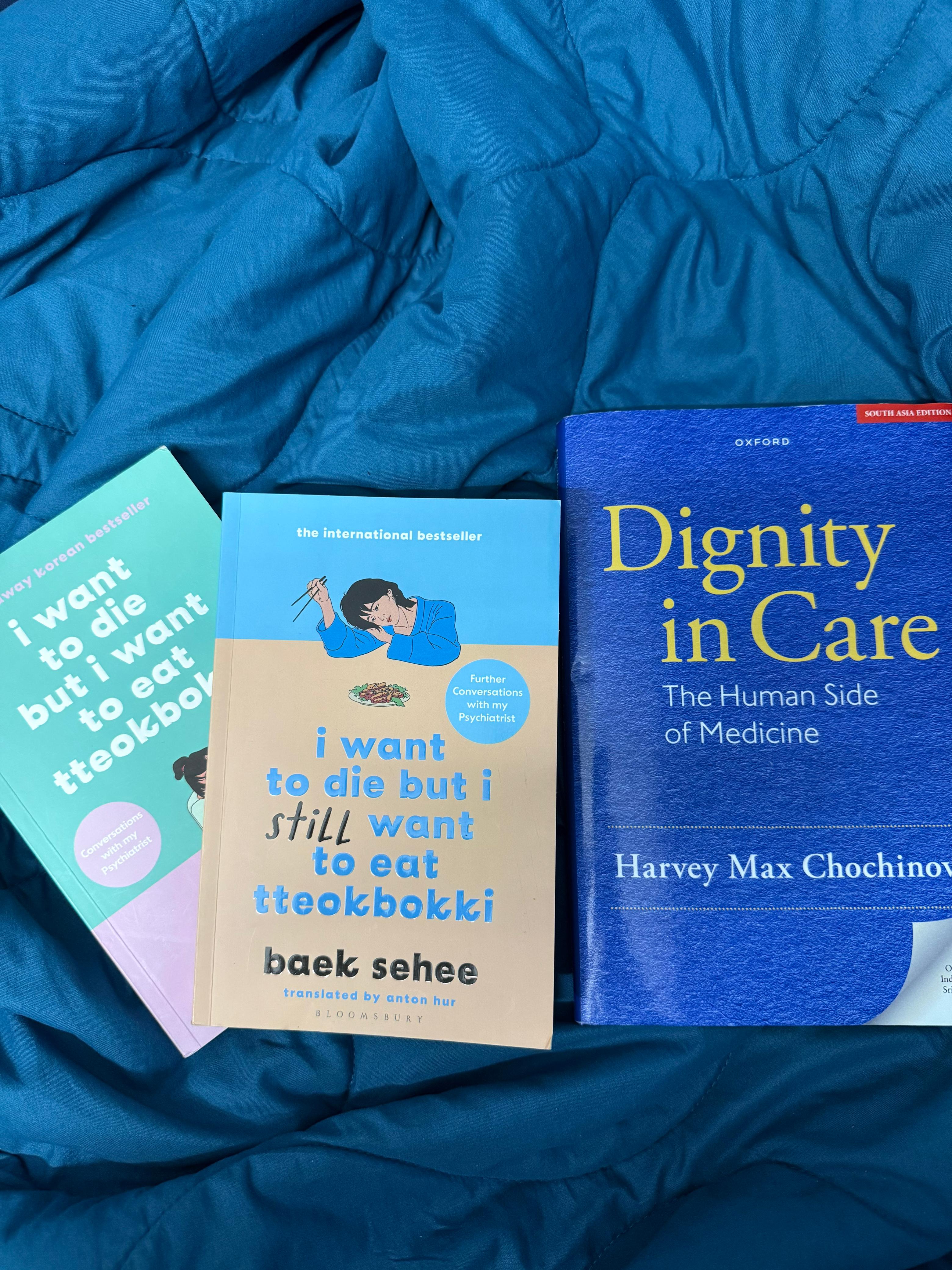
Let’s with I Want to Die but I Want to Eat Tteokbokki and its Part II by Baek Sehee. I was already feeling low when I picked it up, and my physical health wasn’t cooperating either.
The book itself is hard to categorise, and I think that’s why it works. It’s not a memoir in the dramatic sense. Not self-help. Not a psychology textbook. It’s basically therapy sessions, recorded conversations between Sehee and her psychiatrist. The title…Wanting to die, but still wanting to eat.** Despair & appetite coexisting. Hopelessness and craving sitting next to each other. That contradiction felt very human to me.**
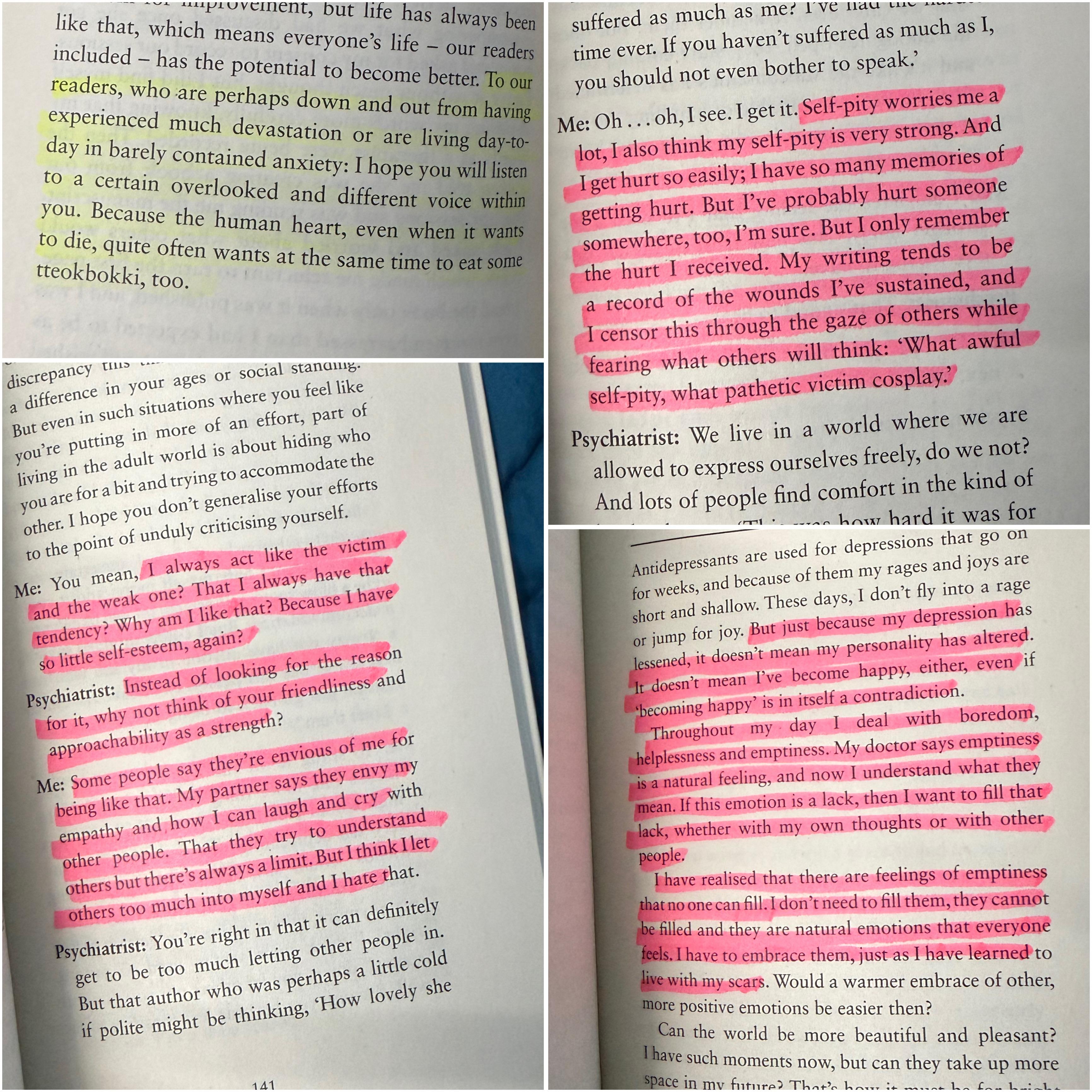
Sehee wrote about **functioning depression, the kind where nothing externally collapses, but internally everything feels heavy. You go to work. You reply to messages. You say “I’m fine.” That part hit me hard. **I’ve spoken openly about anxiety for years, but I had never actually used the word depression. Not publicly. Not even openly in therapy. I would say I feel low. I feel empty. I feel off. But I avoided that word.
Lately, I’ve been feeling very low. And at the same time, my physical health has been acting up too. It honestly feels like my mind and body decided to team up. Through all of this, my husband has been my constant, patient and supportive.
For the first time, at my absolute lowest, I said it out loud: “I think I’m depressed.” I said it to my husband. And it took courage I didn’t realise I’d been withholding. When I tried explaining how I’d been feeling, he unintentionally invalidated it. Not because he doesn’t care, but because he wanted to distract me from it, lighten it, fix it. And I broke down. I sobbed in a way I hadn’t in a long time. But that was okay too. He is learning, just like I am. We’re figuring this out in real time. And in his own way, he’s been giving me what I actually need…time, rest, space, quiet support. I couldn’t be more grateful for that.
Can an Advocate Admit She’s Not Okay?
What feels strange is this… I advocate for mental health publicly. I write about emotional wellbeing. And yet I hesitated to label my own state honestly. Even when I was feeling worse, I kept pushing myself. At work, when someone asked how I was, the automatic reply came… “badiya (excellent).” Day after day. Even when I secretly wished someone would just say, “Take a break.”
Sometimes it feels like “fake it till you make it”… or maybe more honestly, “fake it till you break it.”
Sometimes I worry, what if being this raw becomes a problem for me? I work in public health. I advocate for mental health. What if people stop taking me seriously? What if they think I’m unstable?
But then I flip the question. If the best neurologist in the country had brain surgery, recovered and continued practicing… would we trust him less? Or would we still want him for his expertise? Just because he needed treatment for his brain doesn’t make him any less of an expert.
So why should I feel ashamed about navigating my mental health while working in the same field?
Managing, Not Magically Fixing
Like Sehee wrote, she has held the hands of many people already and was ready to hold many more. (Sadly, she is no more.) That line stays with me. My experience doesn’t disqualify me. It deepens me. It makes me more aware, more compassionate, more real.
She mentioned in her book that she **stopped chasing the idea of being “completely cured.” She consciously removed that phrase from her vocabulary. Depression, for her, isn’t a flu of the mind that simply passes. It’s closer to a chronic condition that requires management. That honesty felt grounding. Not hopeless… just realistic. **And in being that raw and real, it makes me acknowledge my mental health and to be realistic too. To work on myself. And in doing so, to show up for others with more empathy and compassion.
And considering today is also Self-Injury Awareness Day, maybe this is the right moment to say what Sehee mentioned so gently… let’s talk about it without judgement. Let’s seek help. You are not alone. It is nothing to be ashamed of.

Dignity Is Relational
Around the same time, I was reading Dignity in Care by Dr Harvey Max Chochinov. And that book shifted something in a very different way.
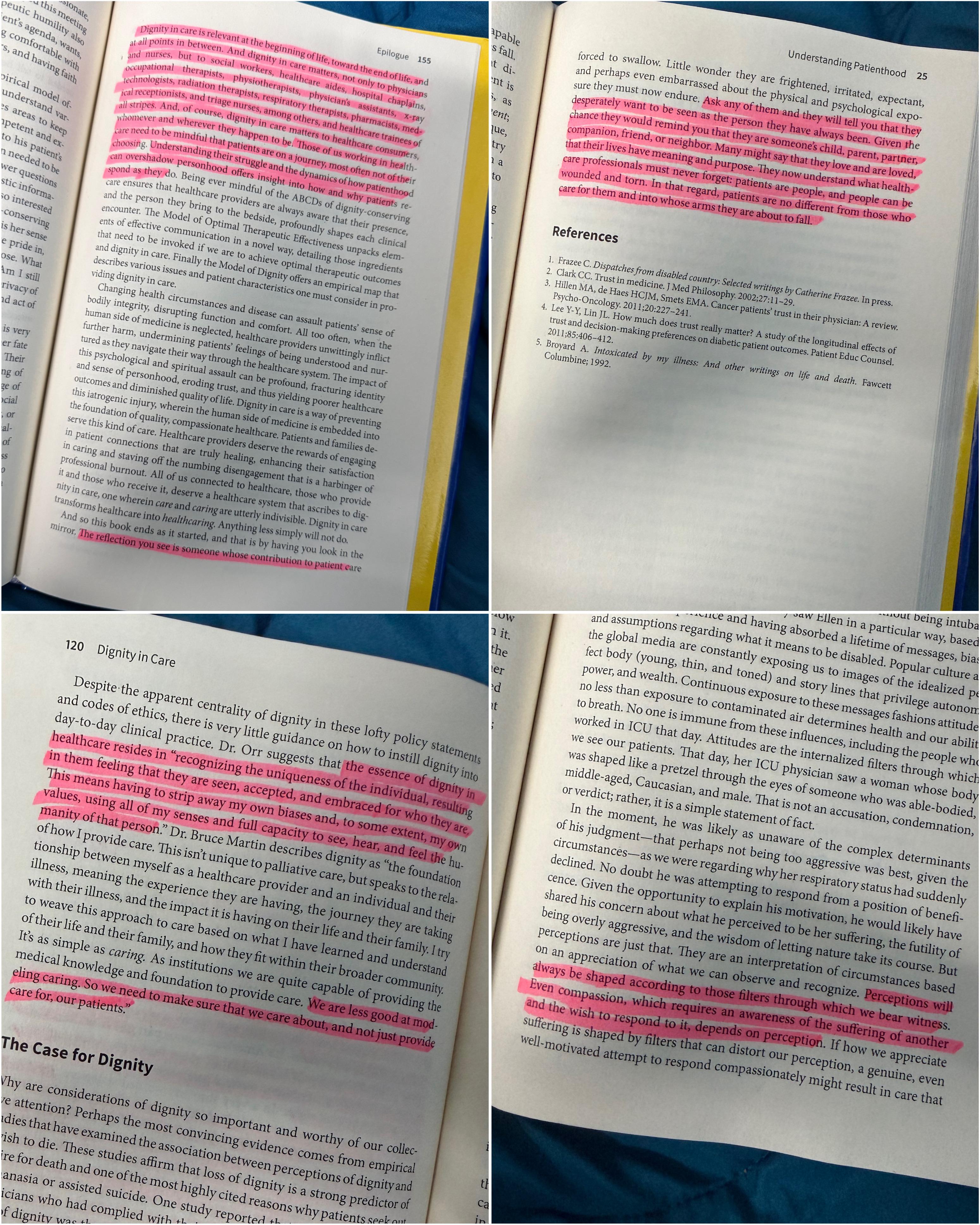
Dr Chochinov argues that dignity is not about politeness. It’s about inherent worth. And more importantly, it’s relational. People feel dignified based on how they perceive themselves being seen. His framework… the ABCDs of dignity-conserving care makes this practical: Attitude. Behaviour. Compassion. Dialogue.
It’s not complicated medicine. It’s human medicine. Sitting at eye level. Asking permission. Listening fully. Seeing the person, not just the diagnosis.
And then he introduces something powerful: the Golden Rule (“treat others as you would want to be treated”) to what he calls the Platinum Rule, asking the patient directly how they want to be treated . That subtle shift moves care from assumption to respect. It requires clinicians to step outside their own values and ask.
He shares a haunting anecdote about a physician dismissing paperwork needed for an anticipated home death, telling a nurse the family could “sit tight” with the body until morning. Technically, perhaps not an emergency. But relationally? Devastating. A failure not of medicine, but of imagination.
There is also that sharp distinction he makes.. healthcare versus “healthcaring.” Evidence-based skill, efficiency and knowledge matter. But “compassion is what separates healthcare from healthcaring.” Healthcaring is not just what we do to patients. It is how we are with them.
It Wasn’t About the Fan
Reading that while navigating my own physical pain made it deeply personal.
For the longest time, my pain was brushed aside. Random clinic visits. Temporary fixes. Until I found a doctor in Chennai who simply believed me. Didn’t minimize it. Didn’t question it. Just acknowledged it. That consistency felt safe.
But the last couple of months were different. The pain worsened, especially in my legs. My appetite dipped further. Walking… something I used to do 1.5 km to and from work every day became harder (forget about the 10kms early morning daily walks, trekkings and running marathons). I barely manage the return walk now, handing my bags to my husband so I can just focus on getting home. And still, I kept telling myself I should be doing more. Individuals with Fibromyalgia are told to stay active. So I pushed.
There was one continuous week without sleep because of pain. My husband insisted I work from home that particular day. I still went in. When someone asked how I was, I said “badiya.” Of course. Later, someone in my team switched on the fan after I had already asked them not to. And I just snapped. “Could you please switch the damn fan off? I’m sick.” And I cried.
It wasn’t about the fan. It was about my mind and body being at their lowest, and me still pretending I was fine. I washed my face and worked through the rest of the day.
Rest. Sleep. And Support. That’s It.
But I realised I couldn’t continue like this. I couldn’t wait another month to see my Chennai doctor. I needed to get checked.
So I booked an appointment in Delhi. I didn’t even research the doctor properly, which is unlike me. But I went. And he was kind.
He didn’t deny my pain. Didn’t dismiss it. When I kept explaining how I wasn’t walking enough, almost defending myself, he simply said: rest. Sleep. That’s it. No guilt. No lecture. Just acknowledgement.
Then I spoke about my appetite. How I still can’t eat lunch properly. How if I try to eat and it makes me not feel good while at work. That’s partly why I skip it. How I try again at home. He looked at my husband, smiled slightly and said, “Well, then we know the reason for the weight loss, don’t we?” We all smiled. And not once did he say, “You need to try harder to eat.” Not once did he lecture me. Again, he came back to the same thing… rest. Sleep. Some tests. Support.
And maybe this is also why, recently, I started an Instagram page called @ayooitsfibro, partly sarcastic, partly survival. A space to acknowledge what I’m feeling in real time. To talk about chronic pain without sugarcoating it. To share research-based evidence so people living with fibromyalgia and other chronic conditions don’t feel like it’s “all in their head.” It’s my way of turning lived experience into something that might make someone else feel less alone. If you’d like, you can take a look.
And here again I witnessed what Dr Chochinov was saying. Technical competence matters. Medication matters. But what preserves dignity is how you are made to feel in that room… whether you’re treated as a case or as a person.
Just Being Seen
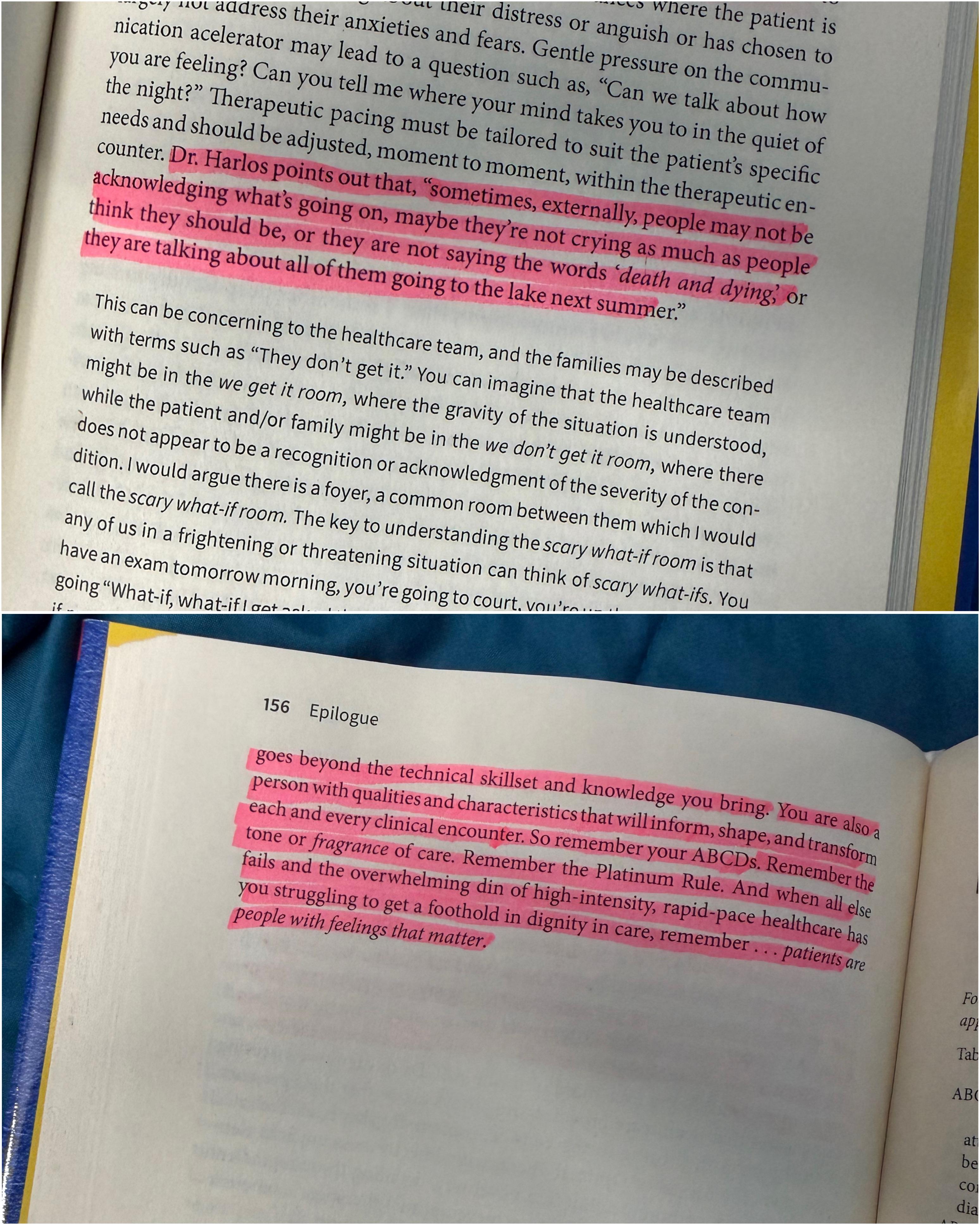
He insists that dignity in care matters at the beginning of life, at the end of life, and everywhere in between. It’s not just doctors and nurses. It’s everyone… from clinicians to receptionists. Because the “tone or fragrance of care” shapes every encounter.
He ends with a mirror, reminding clinicians that their contribution goes beyond technical skill. That line felt personal.
Because ultimately, this book is not accusing healthcare professionals. It is inviting them. Inviting all of us.. especially those of us working in health systems, to remember that patients are people with feelings that matter.
Between Sehee and Chochinov, I realised something simple.
Internally, we struggle to name our pain. Externally, we hope someone will recognise it without making us defend it.
We don’t just want treatment. We want acknowledgement.
Not diagnoses. Not performance. Just being seen.
Learning to Care by Being Cared For
And maybe that’s the real thread running through all of this… whether it’s mental health, chronic pain, or healthcare systems.
We’re all just trying to be honest about what hurts… and hoping someone meets us there with a little less judgement and a little more compassion.
As I continue to pursue my MPH this July, I’m excited to grow into a stronger, more informed, and more humane version of myself not just academically, but as a public and mental health advocate who never forgets the person behind the pain.